


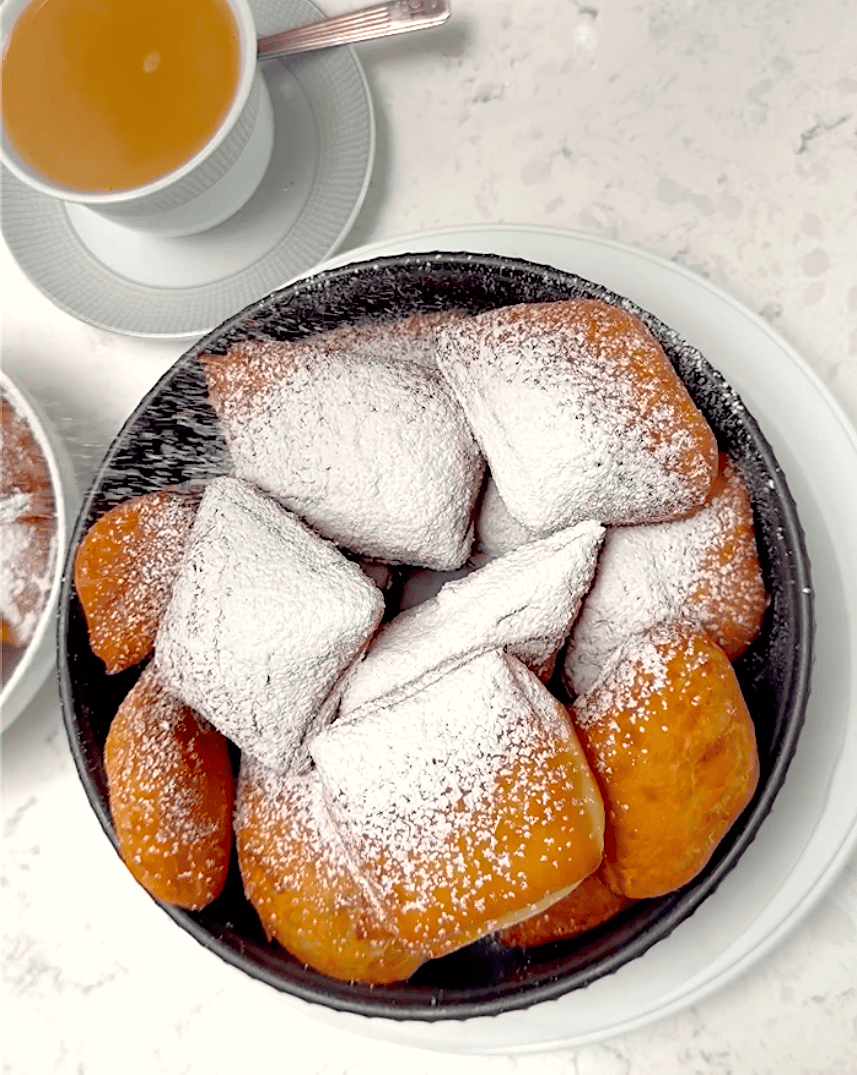
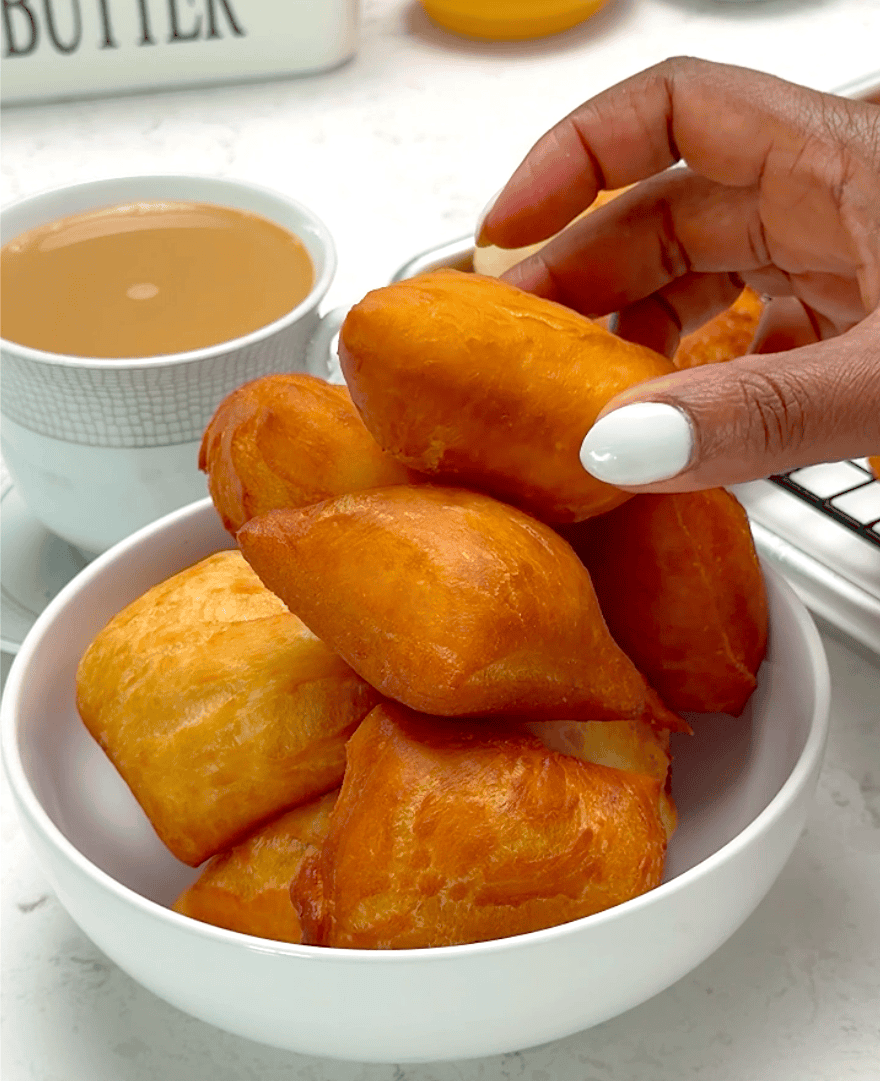
These beignets, popular at New Orleans‘ Café du Monde, are soft, pillowy, and light, made with love in your kitchen. Forget regular doughnuts because these are easy and satisfying.
I grew up eating mandazi and puff puff, popular traditional West African deep-fried dough, which I adore. So when, during my first Mardi Gras in New Orleans, I tried a heavenly bite of a beignet. Since then, Café du Monde’s beignets have had a special place in my heart.
What Is a Beignet?
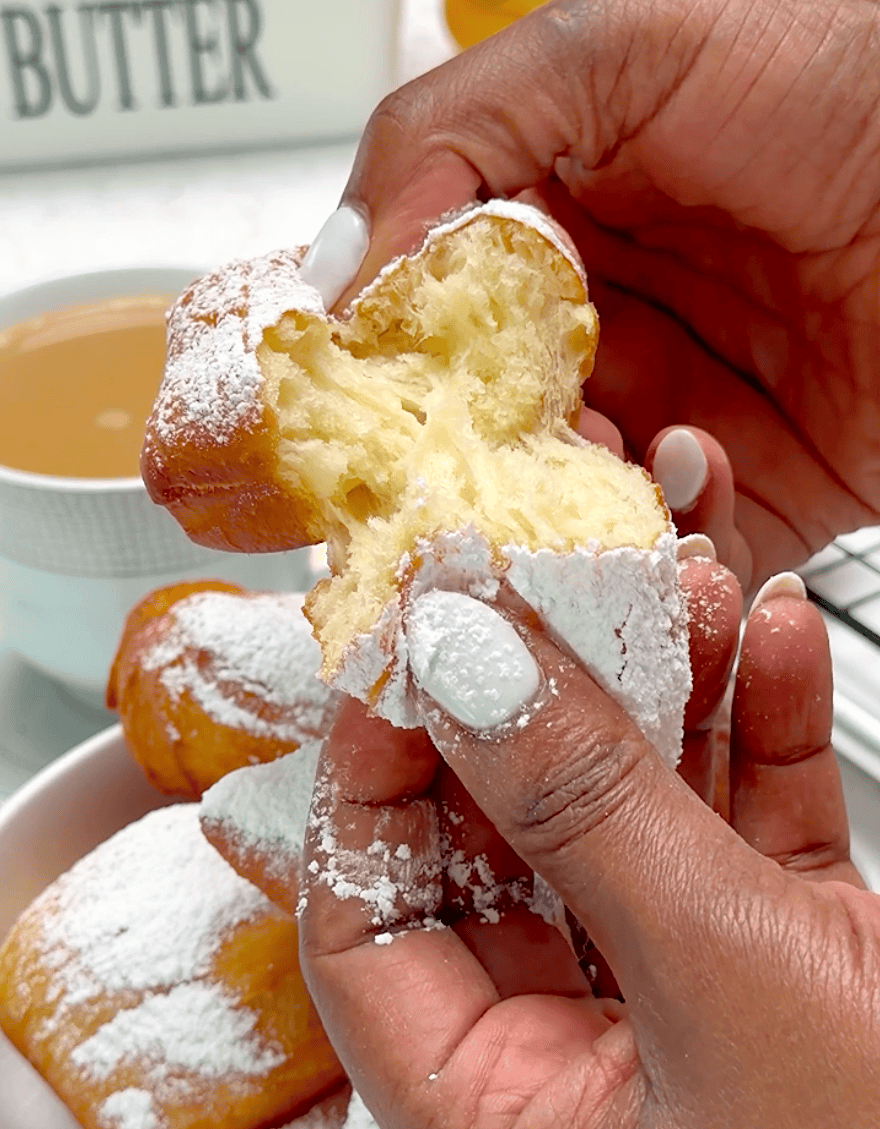
Beignets are sweet treats covered in powdered sugar that are somewhere between a donut and a fritter. Dubbed Louisiana’s state doughnut, the delicious yeast dough, fried and dusted with powdered sugar, is absolutely divine.
How to Make Beignets
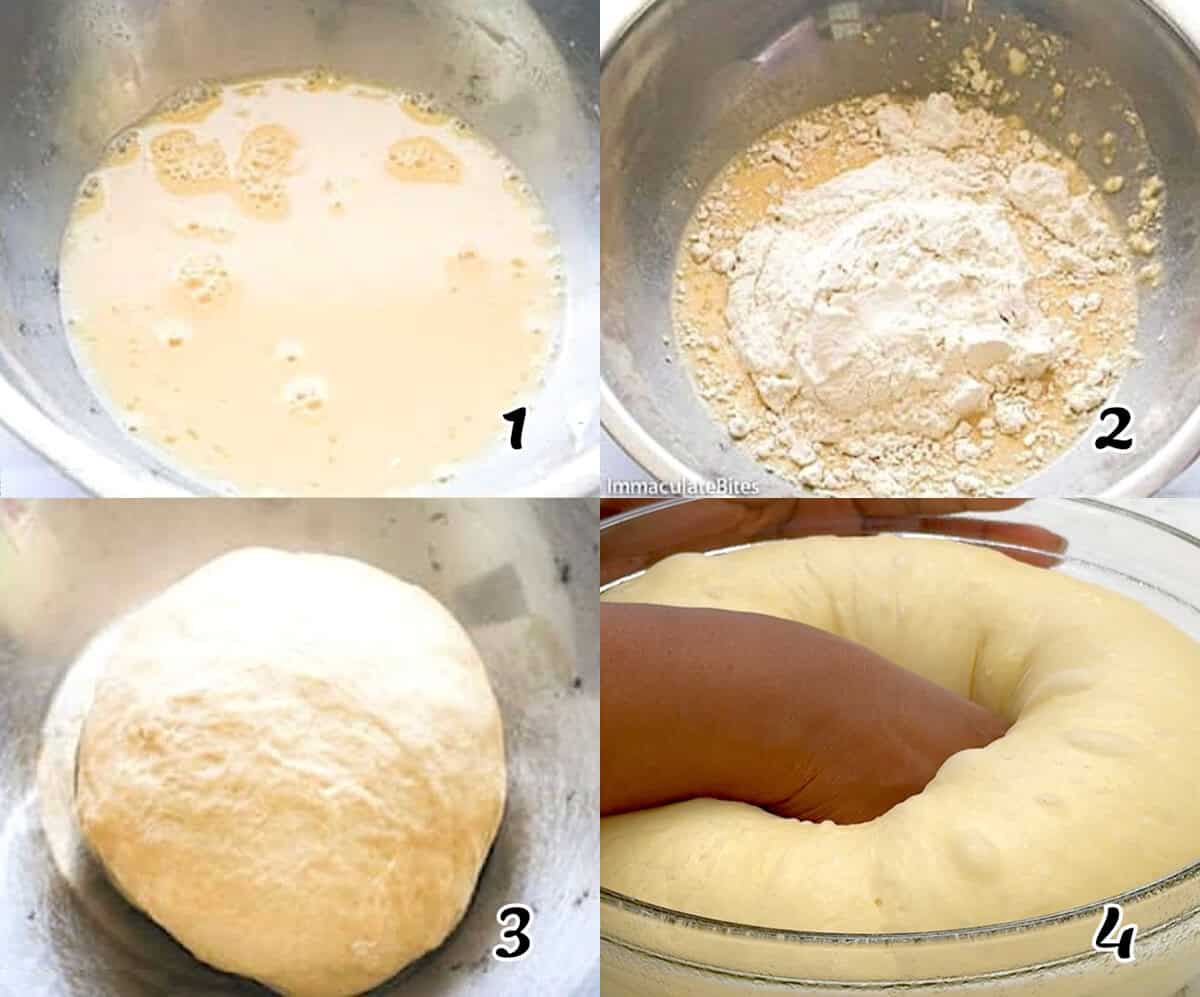
- Activate the yeast in warm water for about 5 minutes or until it dissolves and looks frothy. (Photo 1)
- Whisk the evaporated milk, sugar, salt, egg, egg yolks, and vanilla extract, then add it to the yeast mixture.
- Add about 2 cups of flour and continue mixing with a hand or dough mixer. If using a stand mixer, mix for about 1-2 minutes. (Photo 2)
- Mix in the melted butter (at least softened for easy mixing) until the dough is sticky but smooth, adding flour as needed to make a soft dough. Knead the dough for 1-2 minutes.
- Let the dough rise in a warm, draft-free place for about 2 hours or until doubled in size. Punch it down and dump it out on a lightly floured surface. (Photos 3-4)
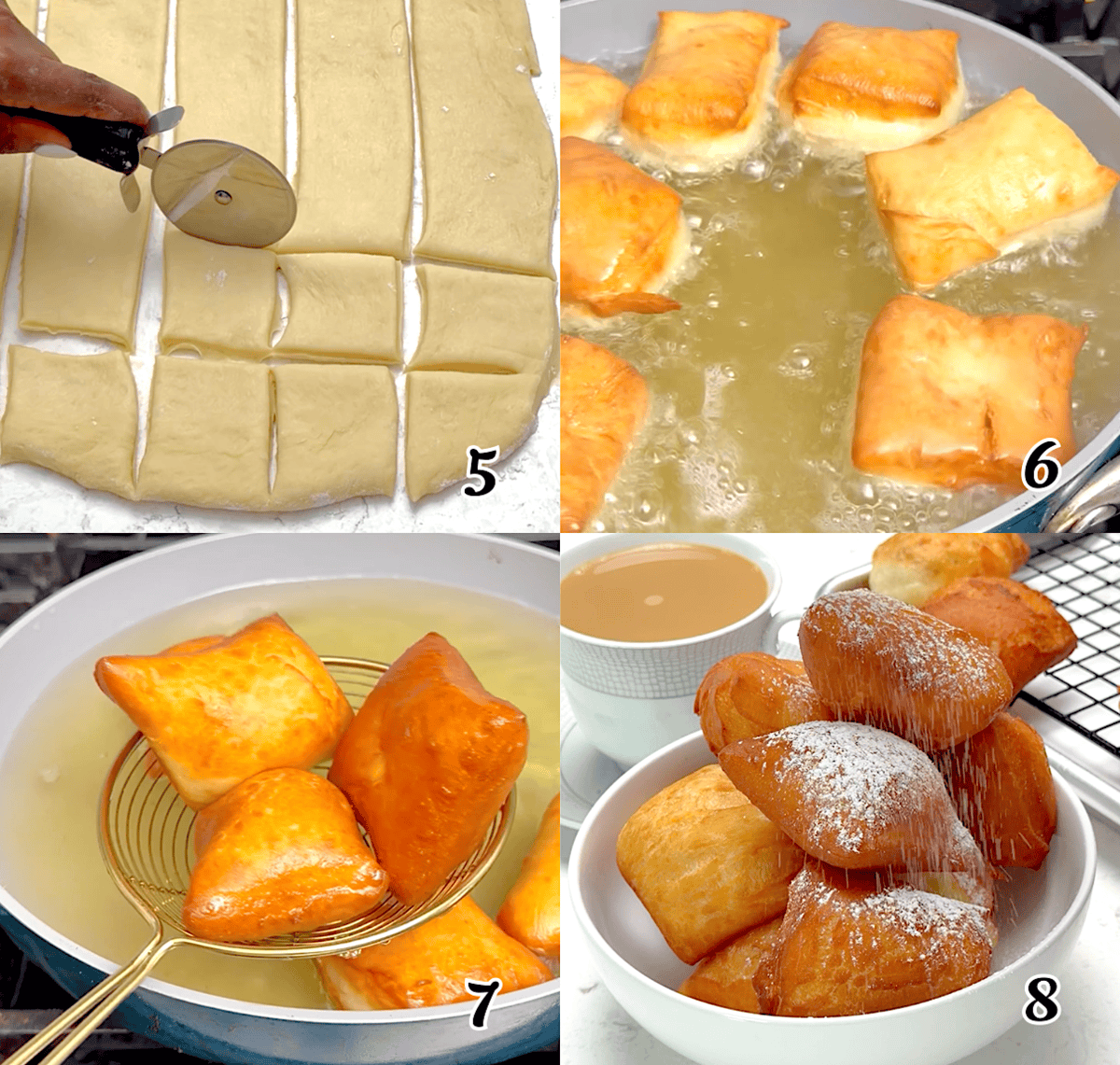
- Roll it out until it is about ¼-⅓” thick. Cut it into 1½-2″ squares using a sharp knife or pizza cutter. (Photos 5-6)
- Fry it after letting the beignets rest for about 10 minutes, working in batches to avoid overcrowding the pan. Flip once and fry until puffy and golden brown on both sides. (Photo 7)
- Drain excess oil and dust with powdered sugar. Enjoy! (Photo 8)
Tips and Tricks
- Oil should be at 375℉ (190℃) when frying. Any cooler and the beignets will take longer to cook, absorbing too much oil. Any hotter and the outside can burn before the inside is cooked through.
- Beignets taste best fresh, and this recipe makes about 35-40 two-inch beignets, so invite some friends over and share this delicacy along with some strong coffee and cheerful conversation.
Make-Ahead and Leftovers
If you make your beignet dough ahead of time (up to three days), you can keep it in the fridge and make them when you are ready. Just make sure your dough comes back to room temperature for about 30 minutes before frying.
Store fried beignets in an airtight container on your countertop at room temperature for 2-3 days, or freeze them for 3-4 months.
Reheat by popping them in the microwave for 10 seconds. If you’ve got a few extra seconds, try reheating them in your countertop convection oven to get that crispy outer layer back.
What Goes With New Orleans Beignets
I like to follow up a spicy meal, like African spicy oxtail stew or asun, with beignets because they round out the meal.
Definitely serve beignets with a hot drink. Besides coffee with milk (café au lait), I love chai tea latte. Usually, I dial back my coffee’s sugar to balance the pastry’s sweetness.
More Amazing Pastries to Try
By Imma
Watch How to Make It
[adthrive-in-post-video-player video-id=”f6rrNboF” upload-date=”2019-09-18T07:55:46.000Z” name=”New Orleans Beignets” description=” Beignets – These New Orleans doughnuts are the best! Soft, pillowy and light just like the ones eat at Cafe du Monde but taste even better! You can’t beat Homemade.” player-type=”collapse” override-embed=”false”]
This blog post was originally published in February 2017 and has been updated with additional tips, new photos, and a video.
Leave a Reply